Episode Transcript
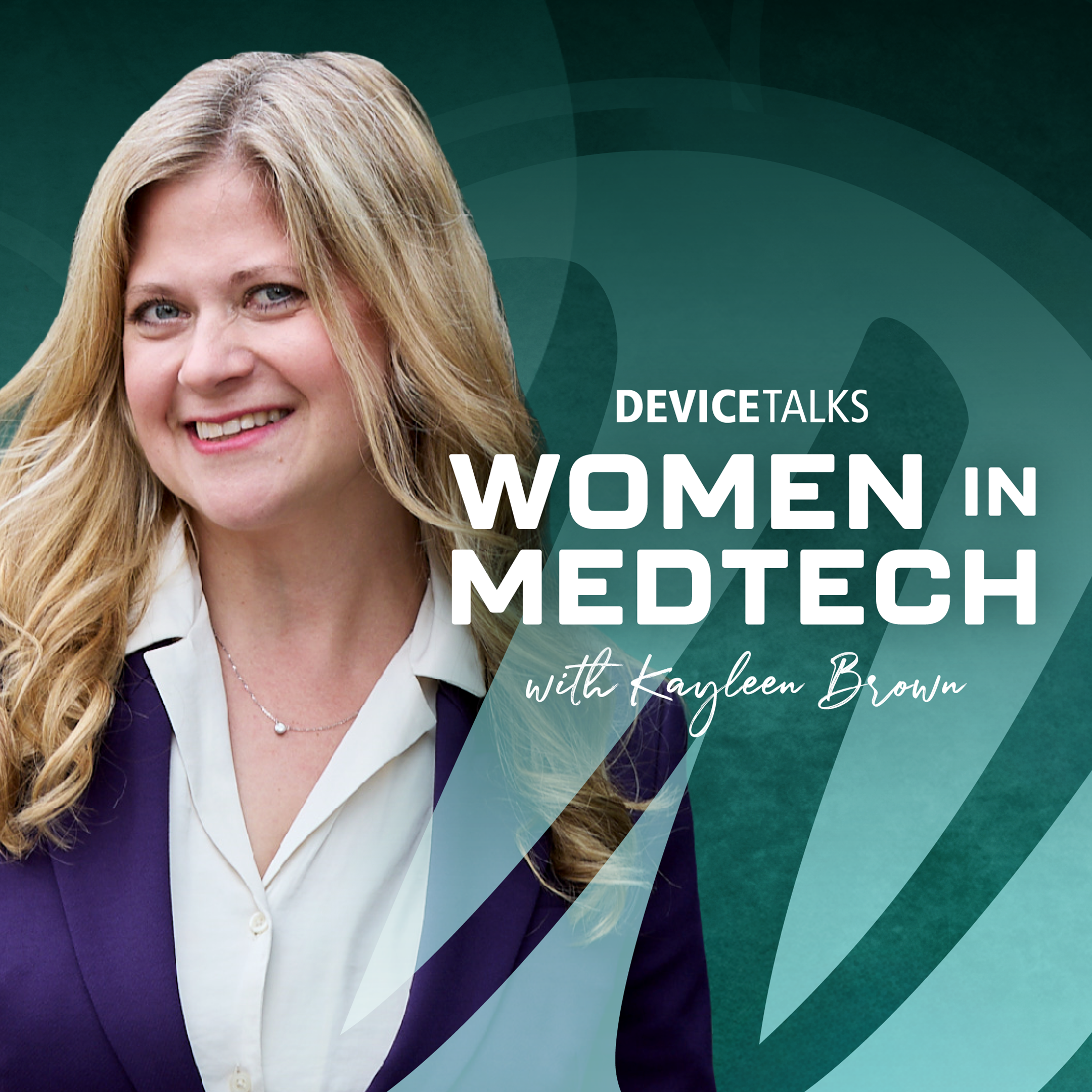
Hello and welcome. I’m Kayleen Brown, managing editor for DeviceTalks, and
you’re about to listen to the next episode of the Women in MedTech podcast. This is the podcast where
we try to reverse engineer the making of a MedTech leader. There has been a huge delay, so first let me
just apologize profusely. I know I promised you one episode a month, but I did get a delay on that, but
for good reason.
Tis the season for conferences. We have our DeviceTalks Minnesota conference
coming up May 4th, and our DeviceTalks Boston coming up just four weeks later, May 27th through the
28th. So I am running around with my hair on fire, but in the good way, like a friendly fire, like a fire that
is putting pep in my step. Either way, that has been the reason. But we are well on our way to finalizing
those details, so I’m able to shift my attention back to one of my favorite things in the entire world
producing this podcast.
So this episode’s guest is Gaele Lalahy. She’s the Chief Operating Officer for
Plexāā, an emerging MedTech known for their BLOOM⁴³ device. In the interview we talk about why did
it come to be? How is it going to impact patients? And more. And of course we get into our favorite
topic, what’s what it means to be a MedTech leader and how Gaele found her way into MedTech. The
most interesting thing about this podcast episode is the fact that Gaele comes to MedTech later on in
her career.
I always love to unpack that diversity of perspective. And seeing as how I was
basically born and raised in this industry, it’s always really nice to see how those outside of the industry
really see MedTech and bring those lessons, what they’ve learned or have to unlearn into the space to
better the outcomes. And Gaele certainly has brought not just a breadth of experience from consumer
tech, but just this passion. And I truly believe she was born with that MedTech gene that we all sort of
have that inspires her every single day to focus on the best patient outcomes and doing it in such a
beautiful style.
Throughout our conversation, what kept coming up is this, let’s just check in
with the patient and make sure that what we’re building really meets that patient need. And I had to
distill it down after listening to the interview a couple of times as this concept of the the patient as the
co-designer. And I really liked that as today’s theme, building devices not just for patients, but with
patients.
So before we go into the full keynote interview, between Me and Gaele Lalahy.
I want to bring in my in studio guest. So why did I choose this in studio guest, the theme and the shout
out. So in my conversation with Gaele, we did talk about who in the industry, specifically allies who have
supported us along the way. And this name immediately came to mind. And the second is the theme.
There are so many parallels, I think, in media and in medical device design when it comes to this concept
of patient as the co-designer. In media, it’s the audience as the co-designer.
So enough about that. I’m so excited to bring in my friend, my dear ally, and
everybody’s all-time favorite podcast host, favorite conference director, favorite webinar host, and just
like all-around favorite person. Tom Salemi, editorial director for DeviceTalks. Welcome to the Women
in MedTech podcast.
This is an honor to be here. Kayleen Brown. This is a great addition to the
DeviceTalks Podcast Network and to MedTech at large. Thank you for doing this.
Oh, shucks, Tom.
Well, for those who I know you will listen all the way to the end of the episode,
you’ll hear that Gaele and I talk about our allies. We talk about who in the industry has helped support
us and brought us to where we are today. And you’re brought up, Tom, and this is the perfect kind of
case in point for that. So thank you so much. Back at you, Tom. Thank you.
You’re always very kind with your kind words. Thank you, Kayleen. I’m getting so
much more out of this deal, having you work with us at DeviceTalks. So I feel like it’s definitely a win win
scenario.
Melt. We’re talking about DeviceTalks. Let’s talk about the upcoming
conferences. So we have DeviceTalks Minnesota, that’s May 4th. And then, ooh, just four weeks later,
oh, my hair is like, I’m getting the sweats. Just four weeks later, we have DeviceTalks Boston, which is
May 27th and 28th. So indulge us a little bit. Let’s talk about the two upcoming conferences, share some
information on the keynotes. I mean, who will be speaking at either Minnesota or Boston?
Sure. No, we’re, we’re excited about, about both events coming up. We are. I think
many parts of us are on fire as a result of this. But getting to sort of the part of the fire where they’re
just still putting out small bits of the fire, we’re not quite under control yet, but we’re getting there.
DeviceTalks, Minnesota is. We brought that back last year. It’s our more intimate setting version of
DeviceTalks.
The McNamara Alumni Center at the University of Minnesota. Really excited to
have Lisa Earnhardt closing things out from Abbott. She’s fantastic. Opening up with Heather Knight of
Solventum, being interviewed by this leader in MedTech, Kayleen Brown. And in between, Mike Blue of
Histosonics. Chris Newmarker will talk with Mike about their amazing company and technologies. Also
honoring the great Manny Villafaña.
He’ll be sitting down with me just toward the end of the day talking about all the
amazing companies that he’s started and sold. So it’s really a celebration of MedTech at large, but also
Minnesota specifically, and Boston continues to be our behemoth. We’ll have multiple keynotes, five
tracks going on at once. Huge exhibit floor. I can’t wait to talk to Ashley McEvoy of Insulet. Can’t wait to
have you open up the conversation. Open up the whole event, actually, with Devi Govender of Abiomed.
That’s going to be a great conversation to hear.
And we’ll have Brian Miller, the new CEO of Sovato and much, much more. So very
happy to have. Think that the ducks are in a row. We’re trying to march them down the. Whatever ducks
march down and get to the end. So we’re excited to be where we are.
It’s so interesting because we’re in the weeds and this is kind of my first time to
hear about the conference. Like one step removed. Like you’re telling me about the conference that
we’ve been. Conferences that we’ve been working on. I mean, that’s amazing.
Yeah. Take a look at the speaker list, people. I mean, really. No, we’re really. We’ve
got every major MedTech represented, mostly except a couple, but lots of things for folks to learn from
and to enjoy.
It’s going to be great. And I’m so excited to see everybody in person. My
MedTech family and then of course our editors here at DeviceTalks, MassDevice, MDO. We’re all going
to come together and hang out, so it’s always old home week.
I agree. And I do want to underline. One thing I’m truly excited about, Kayleen, is
the fact that you’re taking keynote interviews at the meeting. We joke arm wrestling over things, over
the opportunity to talk to these great leaders. And going back to your point about me being an ally and
you’re joining us. When I reached out to you in 2022, I knew I needed not only your amazing skills to
help me put this mess back together, the DeviceTalks Podcast Network
As we were bringing our events back, but I also really wanted to have different
voices on the podcast. And I’m so grateful that I reached out to you. I mean, you have excelled,
exceeded my expectations of what things could be. And to have you kicking off a conference of 1,000
people at DeviceTalks Boston in just the time that we’ve been working together. I’ve just been really
honored to have you help us here on DeviceTalks to take the leadership role you have at this company
and also in the industry.
So thank you for everything you’ve added to the conversation. It’s really surpassed
my expectations by a magnitude I can’t even measure it. So thank you.
Oh, my gosh. Cue the crying emoji. So nice.
So nice.
Oh, well, I’m going to just replay that. That’s going to be my new text tone for
when you talk to me. It’s going to be that entire paragraph, really. Thank you.
Set it to music if you’d like, but it’s heartfelt and it’s meant. And I’m just really glad
that you’re a leader in this industry and can’t wait to see where things go with you as one of the folks in
charge.
Thank you again so much. Speaking of leaders in the industry, let’s shift over to
my interview with Gaele Lalahy. She’s the chief operating officer of Plexāā, most known for the
BLOOM⁴³ Device. It’s an emerging MedTech company. I know you got a chance to listen to that
interview, and it was after the interview was done, we both listened to it, that we came together with
this idea that the theme and something that comes out over and over with Gaele is this idea of the
patient as the co-designer.
And I’m not going to try to give anything away because it unpacks as the
interview goes on. But in general, I think the general idea behind it is that when Plexāā came together,
the organization, they internally made a commitment that no decision will be made unless it’s ran by a
patient. And that’s really special. And it’s actually why I asked Gaele to join us as episode four of the
Women in MedTech podcast.
So for you, Tom, when you think about that theme, what do you think in
relation to the DeviceTalks conferences? When you think about developing the program for the
conferences, who, who do you consider is your co-designer or co creator? Is it the patient? Is it the
industry?
That’s a great question. I loved that part of your interview. And I think medical
devices can be so intimidating and built for the folks who are deploying them. But not benefiting from
them. And I think the folks, the patients, need to be considered. So round of applause to Gaele for
raising that point. I try to do the same thing with events and I feel silly sort of comparing events and
podcasts to life saving devices.
But in this digital world where we’re all zooming and recording podcasts and
communicating within these 30 minute windows, I certainly lose out on that connection to our
customers. And it’s something that I love when I go out to a meeting. I was at the MedTech Innovator
Radar Forum last week just talking to people and just hearing how people see what we do and perceive
what we do and share. Their perception of what we do can be very uplifting sometimes and people love
it. But sometimes they can share things that you haven’t quite considered. So I applaud Gaele for
bringing this to the fore and I think it’s something we all need to be mindful of.
So if we zoom out a bit and we think about this applied directly to the MedTech
industry, not just conferences, not just an individual technology, but this theme. Patient as a co-designer
to MedTech, what comes up for you?
I think as you’re sharing that question, my mind immediately went to companies
like Insulet, which are obviously creating devices that are very consumer focused and, and have to
interact with the users, the patients. And I think a larger thesis for MedTech is that we’re going to see
more and more of that, that MedTech has, for much of its existence has been sort of the power behind
the curtain, the thing that people don’t really know exists.
But as devices become more smarter, as sensors become more a more critical part
of devices, as we start interacting with our devices on our cell phones, people are going to become
aware, more aware of MedTech. So we’re emerging from the shadows, coming out into the spotlight.
And I think that’s great for the industry, both for patient care, but also for investors and for
entrepreneurs and for future job seekers. One of the things I know you’re passionate about is getting
young people excited about MedTech and choosing careers in MedTech and I think this will help that.
Do you agree?
A thousand percent. It’s. You hear me say it all the time, like you can’t be what
you can’t see. Last question for you. So there were a lot of themes that we really could have chosen. The
patient as the co-designer being sort of the key theme. But if you were to put that to the side, did
another theme or quote or anything come up to you from that interview that you feel like you want to
underline a bit for our audience.
I just like the way Gaele really stated clearly, like, I don’t want to be the best at
making a medical device, I want to be the best at what I do. Across all industries. She wants to be
number one, no matter whether it’s consumer or whatever. She just really wants to. She wants to raise
MedTech’s game and she wants MedTech to be throwing elbows with all the quote unquote, bigger
industries, larger industries and more noted industries.
I think it’s great. I think we need that kind of killer spirit and competitive spirit
amongst MedTech executives. So I applaud her for that stance. I think it’s fantastic.
I couldn’t agree more. There’s a lot more themes, a lot more insights. So to our
audience, enjoy every second of it. I know that I did. And then to Tom, my wonderful in studio guest.
Thanks for joining me. It’s always a pleasure. With that in mind, do me a favor. Tom, will you introduce
our keynote guest?
Sure. It’s time for Kayleen’s great interview with Gaele Lalahy, COO of Plexāā.
Gaele Lalahy, chief operating officer for Plexāā. Welcome to DeviceTalks
Women in MedTech podcast.
Thanks for having me, Kayleen. It’s a pleasure to be here. From London. Yes.
That’s so fantastic. I’m on the west coast of the United States, so it’s always
nice where we can meet semi in the middle. So you’ve got to love a the virtual world that we live in. So,
Gaele, there are so many reasons why I wanted to have you sit down in front of me. And they span from
the fact that you have this incredible consumer tech background, which I think having a diversity of
perspective, especially coming in MedTech, is only good for us.
You also have a beautiful presence about you. You’re a fantastic public speaker
and you’re part of MedTech Innovator, which is one of our favorite companies. So you just, you’re the
trifecta. And I think that our goal here with the Women in MedTech podcast is really kind of the making
of a MedTech leader. So that’s what we’re really trying to unpack here. And I find that the best way to
start is at the very beginning and not even in MedTech.
So I like to try to figure out like why you are the way you are. Like, give me
everything. I mean, tell me about your family history, tell me your blood type, tell me your Social
Security number. No, but what I do Want to know what was your first job and do you think that that has
informed any of the skills or leadership abilities that you use today?
Actually, one story I don’t think I’ve told anyone yet, but you prompted me to
actually unleash it because again, in a way to try to bring people from very, very different perspectives. I
think that might be useful. So when I was a young girl, I was a gymnast, I was a national gymnast and I
did compete nationally. I won different titles and actually I wasn’t skilled like everyone else. I wasn’t the
flexible one. But what I could do was think smartly and work very hard.
So the things that I couldn’t do, I had to make up in very other ways. So I couldn’t
do the split like anyone else. But what I could do is try to be creative and do maybe the difficult throw. It
was rhythmic gymnastics, you know, with the balls and the ribbons and etc. So I put it myself, I don’t
have this, but what it is that I can develop or what I can do to be as good or better than the other one.
So I think what it taught me first of all was resilience, hard work, but also to try to always think about
what can you develop in any industry in yourself, in your personality, in anything in life that actually can
set you apart so you can always win wherever the environment.
So fast forward to Panasonic. That was my first job. I moved from France to the
UK because I had the amazing chance to be recruited by Panasonic Europe to lead some of the
marketing projects in Europe. And little addition, I have a postgraduate degree in Japanese economy.
And of course this is Japanese company. So yes, that was amazing. But also they had just signed a big
worldwide contract to be Olympic partner.
So again, as a gymnast who always wanted to do Olympic Games, I was like, well,
I’m not going to do them as a gymnast, but I’m going to do the Olympic Games with Panasonic. So in
that job, actually I had many, many chance to innovate. And I think again, when I moved from big
corporate to startup, I saw lots of, you know, this is something I wanted to do. I wanted to innovate. I
wanted to, to be at the early stage of building something different.
And I could see lots of job roles that said no corporate people, no corporate
people, no corporate people. I’m like, why? I don’t think people realize that in corporates there’s
hundreds of people who innovate day in, day out and who carve their little path In a big corporate. So I
arrived in 2000 in Panasonic. No one knew what kind of e-commerce was. There was no digital
marketing. So I had the chance to build everything up from Panasonic. So I was my little start. And I’m
like, okay, we’re going to do e-commerce. We’re going to sell direct to customer.
What’s the logistics? How are we going to deal with channel conflict with the
current channels? What’s the pricing strategy? Can I get exclusive? So in a way, I was already starting to
be my only startup within a big corporate. And I don’t think this is something that people realize that
people can do even in big corporates. And of course, it’s an amazing business school, right, for a career
or for being a big generalist, which a lot of startups need, especially MedTech startup, where sometimes
it comes from a medical idea, a research idea.
And the next step is like, shit, you know, what are we going to do? How are we
going to go to market? Or how do I build this product? What pricing? What are my clients? How do I do
the marketing? And this is exactly, you know, people like me who have done that day in, day out for
years and years in the big corporate. This is what we can bring.
So you saw a problem, quote, unquote, or challenge rather, and you found a
solution. And then you brought that love of movement and gymnastics and sports into all of the roles
that you, you had just shared with me. So let’s talk a little bit more about that because the fact that you
were head of brand communications and the head of Olympic marketing down the line with Panasonic is
pretty amazing. And then eventually, if I recall, a board member for Panasonic UK.
So there’s, there’s so much to unpack there. And again, I think this innovator
mentality is the common thread. And another thing that you had said, which I wanted to touch on, is
you said that not many people realize that in a big company you can still have that generalist, that
startup mentality where you really have ownership over it, autonomy and ownership and moving
quickly. That’s the startup way. And you absolutely can have that in a big company. I think it comes from
who you are.
So I just wanted to recognize that for our audience that there are experiences
that we have in our life that I think are in ways just showing us what our own superpowers are, for lack
of a better word. Like your superpower is making your own opportunity. Your superpower is finding that
flexibility and that innovation in whatever space you are in. And that’s very clearly led you to success. So
before we sort of shift over from Panasonic to some of your other work, which I want to tap into here,
do you see any, like, outside of what we already discussed, do you see any of the responsibilities in your
roles at Panasonic that have surprisingly informed your role in the MedTech industry? Like what has
carried over.
Oh, my God, so much, so much, so much care for user experience. Again, how to
manage pricing strategy and different channels and manage different models, for example. So in
Panasonic, you know, we were trying to manage the big retailers as well as our own direct, as well as our
kind of small and medium independent shops here in Plexāā. We’re like, okay, we don’t need to have
one strategy, right? We can go direct to patient, we can go after the big hospital, but what if there was
something in between as well? You know, we could go also to the small plastic surgery clinic. So it’s kind
of again, seeing that in the first place and then knowing how to manage, how to manage not the
conflict, but how to manage those channels so that they can all be in harmony. And that one channel
plus one channel plus one channel, they don’t kind of cannibalize each other. So that was one thing. The
other thing is marketing, as you said. I was head of brand comms and you know, I did launch for, with
my. I had a big team at the time in different, in different segments. So I was responsible for all the
product, consumer product categories.
So it could be a brief on TV then a brief on launching new beauty products. Then
we had kitchen appliance, we had cameras, new brand to launch in the market, TV, very established, but
big competition from the Korean brand. So all those brief, you know, just really allowed me to
understand, you know, you’ve got a situation here, you’ve got a product to launch, but every single
product launch is different, right?
Maybe it’s a new product category you’re launching, maybe it’s a new brand in an
established category. Maybe it’s a product where you already have brand power, but there’s lots of
competition. So every product launch is different. But I’ve done that so many times in so different
scenarios that again, understanding how to position and how to build that strategy in order to kind of
build your own brand equity, your own brand awareness. And then how are you going to build the
demand?
Where from? What is your strategy? Is it consumer led? Is it industry led? Is it a
bit of both? Who do you need to convince who are the stakeholders that are going to be influencing
positively, you know, tell the story for you, et cetera. And this is something that definitely brought into
Plexāā just to create that whole picture, not thinking about, we’ve got a device, we just need to ship as
many as we can to hospital.
But really taking a step back and like, okay, actually, what can I bring from this
industry? What can I bring from this industry that would help, that would improve what’s already
amazing there, but, you know, just trying to, you know, in a way, unlearn everything, because I didn’t
want to bring my baggage. I wanted to really unlearn a lot of things and saying, oh my God, this founder,
this company, before I arrived, they’ve done everything right. This is amazing. I’m stepping into this
company.
They’ve got a clinical research, they’ve got a device. But at the same time I was
like, okay, they’re thinking this way, what about that way? What does the founder think about that way?
And we can talk about it a little bit more, but we have a pretty unique way to go to market. And
immediately, you know, myself and our founder, Dr. Saahil Mehta, were like, yes, this is exactly what I
was thinking. But I don’t think he could really see how we would going to make it happen.
So, yeah, a bit of consumer electronic va va voom. Into a MedTech device. This is
what we’re doing.
I think that this is the perfect segue to move to Plexāā, But I want to just
unpack two things before we do so. Bringing that consumer tech mentality into MedTech, I think I said
at the top of the podcast, is only a good thing because ultimately, ultimately, we are here to serve our
patients. We are served here to serve the patients. Yes, exactly. So if we aren’t thinking through the lens
of the patient, we’re not doing our job.
So I love that that’s just built in you. And then the second thing I wanted to
unpack here, and it gives me chills, Gaele, thinking about it. You said that you try to unlearn and not
bring your baggage with. And I think the unlearn is a phrase that we should be incorporating into our
lexicon more and more. Because it’s not just good to unlearn, it’s necessary. Because if we can’t open up
our mind to knowing that we don’t know everything, when we walk into a new situation, we need to
assess that situation. To your point, what’s working?
What skills and perspective can you bring in to continue that progress in the
right way. But if you’re not willing to unlearn, you’re never going to get where you need to go.
Yeah, no, no, you’re absolutely right.
Since you hinted toward Plexāā, I would love to kind of move over to there. So
first, congratulations. Plexāā is the femtech product of the year for MedTech World 2024. I already
mentioned that you’re part of MedTech Innovator, so just that’s a badge of honor just in industry. And
your main product is BLOOM⁴³. So let’s start at the highest level. Gaele, what problem is Plexāā solving
for women? And then we can shift into the technology.
We know that up to one in three breast surgeries end up in complications such as
skin necrosis or skin infection. For breast cancer patients, that means a delayed life saving adjuvant,
chemotherapy or radiotherapy. So we can see straight away, you know, how patients are penalized by
those infections that require in 20% of the cases of re-operation. So very early on in his career, our
founder, Dr. Saahil Mehta, tried to unpack that and try to think, is there anything we can do?
Up to one in three is quite a lot. So besides the patient, of course, complications,
of course, for hospital system, you can imagine as well the burden on kind of work time, not being able
to see new patients, increasing wet immunities, et cetera, costs, et cetera. So he started to look at a
concept called supraphysiological preconditioning. There had been some very early, very early scientific
trials that were done on mice to show that there might be a correlation between increasing the blood
flow and wound healing. So he was the first one to take that clinical research on animal and translate it
into human.
So he did a full randomized control trial on patients in the UK. Took him years and
years and years, I think about seven years to actually to demonstrate the benefit of supraphysiological
preconditioning on wound healing. What supraphysiological preconditioning medical method means is
that by heating the skin between the temperature of 40 to 43 degrees, the body gets stressed and
naturally release what we call heat shock proteins, which opens up the blood vessel and increase the
blood flow. And we’ve demonstrated that by increasing the blood flow, we can reduce complete skin
necrosis by 24% and reduce the need for reoperation by 50%.
So with those results in mind, he was like you blown away. He was like, oh my
God, I didn’t think we would get such good results. So what do I do now? What do I do? Do I write a
paper and I’ve got my name in medical archives forever, et cetera, or do I bring this to patients? Of
course he wanted to bring this to patients. So he raised funding for a prototype. And fast forward two
years later, we have a device.
There it is for our audience.
So the device is used by patients the night before surgery. It’s a wearable device.
It’s used at home again, thinking about the patient. What do they want? What do they need? How can
we make them their surgical experience better? They want to be at home the night before surgery. They
want to prepare their thing. They’re busy. They have busy life. They want to keep doing their thing. So
they pop up into their bra, they stick that onto their belt and they run the preconditioning cycle for
three hours.
That’s it. That’s all. And so our early, kind of early feedback is very, very positive.
We’re currently in trial in pilot in Stanford and we’re actually launching the device in the US this month.
So we are ready to launch. Yeah, yeah. The device has been ready in the US for the last week. On top of
that, women in our research, women have told us that before their surgery, they feel unprepared,
mentally, physically, they don’t know what to do. They want to do something. They want to be part of
their surgery. They want to be empower. They want to, you know, take part of their recovery. So myself
coming from the balanced Menopause app, which was kind of, which is a high, highly successful app,
myself and Sahil discussed, well, why don’t we do an app to holistically prepare the woman before their
surgery? So of course, around the product, which is the night before surgery, can we do something
before holistically? So with created with our surgeons and clinician, a program starting four weeks
before your surgery. What do you need to eat?
What do you need to prepare in your hospital bag? What do you need to do to get
ready to sleep on your side after your surgery? What exercise should we do? Should you eat more
proteins? How to prepare yourself with your work, how to prepare your children, how to talk to your
partners? What help are you going to need? And we’ve created a whole program pre and post
operation. So those two things go hand in hand.
And we just want to be the company that just prehab people for surgery
completely holistically, through the power of supraphysiological preconditioning with the device, but
beyond that, with the app. So that’s us.
I feel almost emotional hearing this because you’ve hit the nail on the head of
one of the most essential aspects of the patient experience, which is this sense of helplessness. And by
providing the answers to the questions a patient may not even know to ask is so confirming, so
validating such the support that you need. And there’s that consumer tech coming in. Again, where
you’re thinking about is a full spectrum or a continuum of service for the patient as opposed to a
transactional one off piece.
And the third part is very MedTech. So, Gaele, it’s so interesting that you
started, quote, unquote, in consumer tech. There’s a root of MedTech in you that you just had to have
been born with. I think where you see that information is power. And the patient experience from the
beginning, the mental, emotional experience informs the outcomes almost as much as the technology
can. That’s power.
And can I pick on that? Because again, not coming from, you know, not being
medically trained, not knowing really much about breast surgery again was amazing because the first
thing I did is I gathered patients. I’m like, teach me, tell me, what do you need? What do you need?
What would you have liked? So we had patients who had already had their surgery. What would you
have like in your journey? And patient who had been diagnosed who didn’t have their surgery yet. And
we asked them, what do you want? What do you need right now? And we spend so much time just
immersing ourselves in their world to understand, literally we had. So before we build the app, we had a
massive board with lots of wishes.
And I was like, okay, I’m just going to try to deliver. And I felt I needed to deliver
to them. So we took all their wishes and then somehow we just packaged it nicely in a way that, you
know, created a good user experience and delivered it to them. But all the way through the
development and I’m just talking about the app, but actually the same happened with the device. Really
same concept. That was slightly before my time, but same happened with the device at every step of the
way. Just going back to the patient, is it that what you had in mind? You know, have we answered the
brief? And I’d like to say that the highlight of my career, and I’ve had pretty exceptional highlights in my
career, like being in rio with Team GB at the Olympic Games or opening ceremony of London 2012
Games, but nothing matches at the end of one of those workshop with patients, one of them.
So I was presenting to them what we felt the app would look like and how we
taken all their ideas and she pulled me apart and she said, so you really have listened. That was an
amazing moment. So, yes. And yeah. So that my story about just ask the patient and I think our
company, again, sounds really, really obvious. But in our company, we’re very, very proud of having the
patients champion in our senior executive team.
Carly Moussa, who is a breast cancer survivor herself. And I said that to everyone.
No big decision is ever made until we ask Carly, what do the patient think? You know, and I think that’s
pretty special. But again, sounds a little bit obvious because this product is not for us. This company is
not for us. It’s to serve the patients. And another thing I’d like to say we’ve actually pushed the patient
experience one step further.
We really wanted the patients because again, putting ourselves in their shoes the
night before surgery, you really want to receive something special at home. You know, you don’t want
to have an issue. You want to see a product that looks pristine already charged with all the information
you need, et cetera. So again, instead of adding more burden to hospital and asking them to rent the
device to the patients and to charge it and please make sure it’s clean, please make sure it looks
beautiful and new, et cetera, instead of asking hospital, I’m like, no, no, no, no, no.
I’m just going to pay somebody. I’m going to pay somebody just to make sure is
done to the standard that I want and I want to audit that. I want to make sure that every patient gets a
device at home a week in advance. I don’t want them to be stressed, like they haven’t received it two
days in advance. We’ll send it the whole week in advance. And I’ll have a company, we’ll have a
company in the US who’ve been fantastic, they’re working with us and they’ll make sure that the
product is tested, charged, look as new in a beautiful box with a return label, prepaid envelope and sent
to the patient a week in advance. We have support from other patients in the community. If patients
have questions, we’ve got videos to make sure patients are supported all the way through to utilize the
device. So we are not leaving the device to hospital.
The hospital don’t have to worry. We’re taking part of taking care of the whole
user experience ourselves just to make sure it’s the best it can be.
Everything about what you just said thrills me. And I don’t think that any of this
is obvious to MedTech, historically, there has been a disconnect between the patient experience and
what we think the patient needs. So by bridging that gap, I mean, you’re really moving the needle
forward in the right way. And the fact that you thought about even down to a prepaid envelope, like
return envelope, that to me speaks volumes. Because as a mother, as a wife, as a daughter, as a niece,
as an aunt, I am always thinking about everyone else and I’m always trying to prepare to the best of my
ability and I’m always trying to think, what else do I need to do? What else is on that list?
And when a patient is going through an experience like this, they don’t need
more on that list. So by taking up how do I return the device from that list, you’ve just made a huge
difference in that patient experience. All of that is essential, just as essential as the device itself working
the way you expect it to. So just beautiful.
I’m going to pivot us only for timing. There’s just a lot to unpack. But for the
Women in MedTech podcast, I think it’s really important to talk about leadership. I mean, you are very
clearly a leader in so many different industries and you’ve already established yourself as a leader in
MedTech. We need more talent in MedTech. We need to draw leaders like you into the space so we
have more diversity of perspective so we have that strong leadership to move the needle forward.
So I’m going to start with, and I, I, I’m laughing already thinking about it
because as a woman, we tend to not let our ego show. I am asking you, Gaele, no holds barred, go full
ego on me. But what do you think has helped make you the badass that you are? Like, what did you
earn, learn or sharpened throughout your time to like, make you feel like you could take this leap into
MedTech with the confidence that you very clearly have. So why are you such a badass?
Well, I work damn hard.
And I don’t know, I think I have extremely high expectation of myself and of other
people and I think people respect that. And I’ll pride myself of leading highly efficient and effective and
motivated team because I never expect anyone to do something that I wouldn’t do myself. I wouldn’t, I
would always trust people. You know, if they’re willing to try and do something, I’ll just, gosh, help
them, push them, spread their wing and try it.
I’ve taken some of my team member in three different jobs already. There’s
people working with me At Plexāā who are with me at Panasonic, came with me at Panasonic and now
they’re here at Plexāā with me. And I think it’s about just providing an environment for people that they
can flourish and not holding back. And again, I think you talked about diversity and how do we bring
more talent, more diversity into MedTech.
While I’ve single handedly just brought four women into MedTech from other
industries in just the last year alone without being scared, without being scared because you know, I
know the right attitude, the right experience doesn’t have to be natural, doesn’t have to be lateral.
They’ve never launched a medical device. So what? Because they launched the Lumix category in the
UK, you know, brand new category, you know, in a category that’s already established where Panasonic
was a nobody, surely she’s got the skill to launch one medical device. And there’s stuff we want to know
and it’s okay, but there’s many things that we do know or there’s tactics that maybe the MedTech hasn’t
even seen yet that we can use.
And when I was in consumer electronic, that was the same. We were looking not
within consumer electronic. We were like, okay, who does this the best? Who does the best TV
advertising? This is not Samsung, this is not LG. At the time that was the car, the car industry, they were
doing the best, they were doing the best ads, you know, or FMCG brands, you know, the co was one. So
this is where you need to look and same, you know, in MedTech. Well, I’m not going to look at my
competitors in MedTech. I’m just going to look whatever discipline I want to be the best at. I’m just
going to look very broadly, extremely broadly and pick my ideas from wherever it is.
Surely if it’s not in MedTech, even better. And how do I translate that? Does it
make sense?
Absolutely. And so I, what’s important to me is to make sure that all of these
highlights that I’m hearing from you are really recognized by our audience. So what I’m hearing, Gaele, is
one, you have an ability to make space, make space for patient need, make space for talent coming in,
bringing those talent with you, making space for their career, for their growth, making space for your
own growth, making space for product growth. So when I think about, I distill it down to making space
that, that is so powerful and so important.
And also what I’m hearing is you aren’t giving yourself reasons to say no, you’re
giving yourself reasons to say yes. And I think that that is everything, because we have 101 reasons to
say no to everything. Sometimes saying yes once is the hardest move. Do you have any advice for
females in MedTech or anybody or allies as well? Anybody in MedTech? How do you get to yes quicker?
And, you know, I think there’s something to say about allyship and just run it past
somebody, you know, call a friend, you know, call a friend and just hear yourself. You know, hear
yourself. Find the excuses that probably don’t ring very well once you say it out loud or just get other
people to give you the pep talk. And it’s fine. Actually, call me. I’m very good at. But yeah, sometimes,
and it’s fine. You know, sometimes you need other people, you know, to, you know, to give you the
confidence. We all have our, you know, wobbles or times where we think we can’t do something.
It’s okay. It’s okay. But don’t let that stop you. You know, just call a Kayleen or a
Gaele and see, you know, and see what they say. And I doubt you won’t find many, many people who
believe in you and who believe that you can achieve whatever you set yourselves to achieve.
So maybe the solution isn’t something that you have to find yourself. The
solution sometimes to saying yes, when maybe your gut reaction is to say no, is to call a friend, call a
friend, call an ally, and say, me, unpack it. What are your thoughts? I love that so much. And it makes me
think actually about our editorial director here at DeviceTalks, Tom Salemi. I’ve known Tom for 15 years,
and in the last two, three years, he’s always. He’s my absolute first call, first text message for Zoom, for
anything.
And I have found myself starting with that, oh, I can’t do this because. Or I’m not
the right person because. Or this probably wasn’t as strong. And he stops me immediately. Gaele and
nobody else in my entire life has ever done this. He stops me almost aggressively immediately and
says, whoa, whoa, whoa, whoa, whoa. Like, are you kidding me? You’re the only person who can do this
job. He’s not building me up. There is a truth that I’m hearing from him. He believes this.
So your allies, they believe you. They believe in you.
They believe in you. And it’s fascinating that you have also your ally like that,
because also in my career, it’s really helped me to have other people see things in me that I didn’t see in
myself. And it’s just, just so important. When I got given the job of marketing director, I was the last one
to think I could even just, you know, even ask or even just think about it until, you know, my ex boss
said, this is obvious that you can do this.
Is it, is it? So just don’t, don’t, don’t be scared. In a way, it’s just about humility to,
you know, you don’t need to find all the strength by yourself. You know, we’re just all humans, you
know, but there are so many people, you know who want to help you around you. Just ask, make them
happy that they’ve helped you along your way.
I love that so much. And I think also that speaks to going back to plexa. It goes
back to the industry partnerships that you have. Like again, MedTech innovator is just one example. So,
you know, we’re talking about allies as people, but allies can also be organizations, you know, news
outlets. I mean, it can be anything. Like, as long as you’re finding those supporters that you can connect
to that see your value, not only is going to lead to success.
So we’ve, we talked about why you’re a badass. We talked about MedTech
leadership and how leadership can come from so many different experiences. And arguably having more
diverse experiences could lead to more effective leadership. We talked about how to lean on those
organizations and people around us to help propel us forward. What are or who are some names we
should know as MedTech leaders? So do you have any shout out? Is there a team member or somebody
in your orbit that you’re like, this is a future or current MedTech leader that we need to shout out.
And I think when we first talk about this, Kayleen, I mean there’s a very, very
obvious one to me and she’s, guess what, an MTI alumni as well. We were on the same cohort of MTI
MedTech Innovator in 2024. And this is my friend and mentor, Maria Artunduaga. And do you know
Maria?
Yes, actually, Maria just gave me a quote for an article that we were writing for
medical design and outsourcing. And it’s so funny you ment that I went, I need a quote about medtech
leadership. So I reached out to Maria immediately and she got back to me within two hours. Go on. But I
could not agree more with your statement.
Good, good, good. So in a way, she’s not the one to watch, she’s the one being
watched already.
Yes.
Maria is absolute phenomenon, a force of nature. You know, physician, scientist
turned kind of leader and entrepreneur. Tech took family, kind of, you know, her own family kind of
sadness or losing one of her grandparents to COPD and just developing that amazing. That amazing kind
of device that allows kind of lung functions to be tracked with AI and et cetera, et cetera. So, yeah,
Maria has been very generous to show me the way in MedTech, sharing stuff. When I was a year ago,
I’m like, I’ve got zero contact in this industry, whatever. And she used to just send me Excel spreadsheet
of stuff like, you don’t need to reinvent anything.
You know, take this, take this, take this. And yeah. Thank you, Maria. Thank you,
Maria. And why not, right? Why would we not help each other? Because at the end of the day, if we all
move faster, we’re not competing with each other at all, which is trying to help more patients with
different methodologies with different kind of medical problems. And surely if I can get to where I need
to be in one year instead of five, everyone wins.
Everyone wins. And she sees that. And she’s such a great ambassador as well for,
you know, for more diversity in, you know, in science, in tech, in MedTech as well. She’s doing so much.
She’s. Yeah, definitely. Thank you, Maria, for everything. And I absolutely. I never go to California
without making sure. Yeah, we. We speak. Yeah. A great leader. A great leader.
That’s amazing. I will actually, in our show notes, I will drop the link to an
interview that we did with Maria so you can get a little bit about her background and a little bit about
our organization and just see exactly what Gaele and I see. She is incredible. So thank you again for
sharing that. And Gaele Lalahy, chief operating officer for Plexāā, thank you so much for joining us on
the Women in MedTech podcast. I wish we more time to unpack all of these great pieces of advice, your
experience, but ultimately, how great is it to be in the medical device industry?
Thank you for being part of our industry and thank you for being on the
podcast.
Kayleen, thank you so much. We just had fun. Thank you. It was great.
And that’s a wrap. Thank you so much for listening to this episode of the
DeviceTalks Women in MedTech podcast. It was a thrill having Gaele Lalahy, COO of Plexāā, join me on
the podcast and to help unpack our theme patient as co-designer. It was a terrific way to see how an
emerging MedTech is really listening to their patients and making design decisions based off of patient
needs and feedback. Also, thank you so much Tom for joining as our in studio guest.
As mentioned, we have two conferences coming up up DeviceTalks Minnesota
May 4th and DeviceTalks Boston May 27th and 28th. So please join us for both. Tom gave me all the
kudos and all the credit and I am so excited to be leading a number of the keynote sessions as well as
our Women in MedTech breakfasts. So we’ll have a breakfast at DeviceTalks Boston and as well as
DeviceTalks Minnesota. I will be sending out more details around that, but you are always welcome to
go to minnesota.devicetalks.com and boston.devicetalks.com to see those full agendas and the speaker
details. It’s going to be a great time and it’s also really fantastic opportunity for me to meet our
audience in person and to say hello to my friends.
So looking forward to seeing you there. Once again, thank you so much for
listening to this episode. We’ll bring you another one next month. This time I really will bring it to you. I
am Kayleen Brown, Managing Editor for DeviceTalks. Please follow DeviceTalks on LinkedIn. Please
follow me, Kayleen Brown, and our Editorial director, Tom Salemi. While you’re there, follow Gaele
Lalahy and follow Plexāā on LinkedIn.
But most importantly, please follow the DeviceTalks Women in MedTech
podcast on your favorite podcast player. Or better yet, follow the DeviceTalks Podcast Network so you
don’t miss any podcast episode. From our entire portfolio of podcasts, thank you so much as always for
the privilege of leading these conversations. It’s my favorite thing in the whole world. I’ll catch you next
time.